0 Heart matches
⚑Flag♣Club♦Diamond♠Spade⚑Flag♣Club
No die shows Heart.
Understand the dice, recognise the symbols and learn how to count a round result with simple examples.
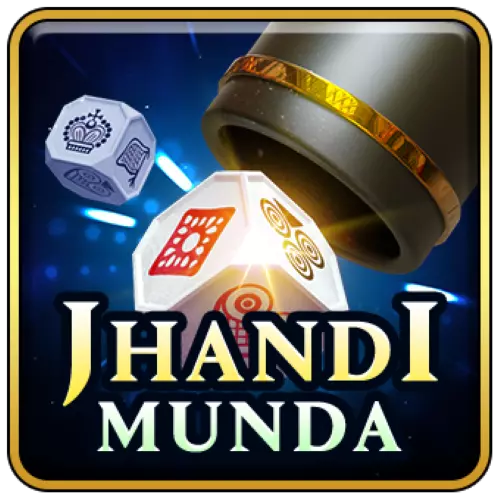
Jhandi Munda is a symbol-based dice game. In a common format, six dice are rolled together, with each die carrying six different symbols instead of numbered dots.
The result is read by counting how many dice display each symbol. You do not add the symbols together to produce a numerical total.
This guide explains that common format. For the exact version available to you, check the dice layout, instructions and result rules inside the game.
Common designs use four familiar card suits together with a flag and a face or crown. Artwork and names can differ, so match each picture to the labels on your screen.
| Symbol | How to recognise it |
|---|---|
| Heart | A heart-shaped card-suit symbol. |
| Diamond | A diamond-shaped card-suit symbol. |
| Spade | A pointed card-suit shape with a stem. |
| Club | A three-lobed card-suit shape with a stem. |
| Flag | A flag design, commonly labelled Jhandi. |
| Face / Crown | A face or crown design, depending on the version. Use the name shown in its rules. |
Identify the pictures on the board. Read the instructions before interpreting any highlighted result.
Let the dice animation finish. Use the final faces shown for the completed round.
Work through the dice one at a time. Record one appearance for every die showing the symbol you are checking.
Compare your count with the result display. Any settlement depends on the rules for that version.
Imagine the final dice show: Heart, Flag, Heart, Club, Flag, Heart. Count each appearance once.
| Symbol | Appearances |
|---|---|
| Heart | 3 |
| Flag | 2 |
| Club | 1 |
| Diamond | 0 |
| Spade | 0 |
| Face / Crown | 0 |
The counts add up to six: 3 + 2 + 1 = 6. This is a useful way to check that you counted every die. A symbol appearing several times is still counted separately on each die.
Three appearances describe a match count, not an automatic payout multiplier. Use the game's own paytable to interpret the financial result.
For each teaching example, count Heart only. The same method works for any other symbol. The pictures below are simple labels, not replicas of Indslots dice artwork.
No die shows Heart.
Only one die shows Heart. Check the one-match settlement rule.
Two separate dice show Heart. Count both, even though the symbol is the same.
All six dice show Heart. The Heart count is six; every other symbol has a count of zero.
Different symbols can have equal counts. Three Hearts and three Flags means three appearances each; it does not, by itself, define a payout or a special tie result.
A single appearance means exactly one die shows the symbol. Whether that produces a win, a returned stake or a loss must come from the actual game rules. Do not infer it from the symbol count or a different platform’s guide.
Find how the paytable handles exactly one appearance, separately from zero or two appearances.
If a multiplier is shown, check whether it means profit alone or the total returned including the original stake.
This guide explains how to read dice, not a verified Indslots payout schedule.
Assume six independent, fair dice, each with exactly one face for each of six symbols. Choose one symbol before the roll. Each die has a 1/6 chance of showing it.
| Matches | Probability |
|---|---|
| 0 | 33.4898% |
| 1 | 40.1878% |
| 2 | 20.0939% |
| 3 | 5.3584% |
| 4 | 0.8038% |
| 5 | 0.0643% |
| 6 | 0.0021% |
The calculation is C(6, k) × (1/6)k × (5/6)6−k. C(6, k) counts which dice show the chosen symbol. Percentages are rounded.
The chance of at least one match is 66.51%. This is not a win rate: winning depends on the settlement rules, including whether one appearance qualifies.
These are our calculations for the stated mathematical model, not measured Indslots results or predictions. Six matches means six of the symbol chosen in advance, not six of any symbol.
In the format explained here, six symbol dice produce a set of pictures. You count the appearances of each picture.
Two numbered dice produce a sum. You compare that total with seven: below, exactly seven or above.
For examples of numbered dice totals, read the 7 Up Down guide.
A result may contain only three different pictures across six dice. Repeated pictures still contribute to the total count.
Two symbols may share a colour. Read the shape and its label so you do not group different symbols together.
A symbol count tells you what appeared. The rules determine how that count is settled, including the treatment of a single appearance.
Under independent random rolls, earlier results do not make a symbol due to appear next. A history display is not a guaranteed prediction.
Keep the complete dice area visible when checking a result. If an interruption hides the end of a round, use the recorded result rather than guessing from the last animation frame.
You can use the links at the top of this page to return to the symbols or worked example. For installation information, visit the Indslots download guide.
Yes. For example, three Hearts and three Flags give each symbol a count of three. Check the game rules for settlement.
Yes in a completed six-dice result, when each die shows one symbol and is counted exactly once.
Not necessarily. The probability of a match describes the dice; the paytable determines which counts win.
Yes under the independent fair-dice model. For one symbol selected in advance, six matches have probability 1/46,656.
No under independent rolls. Its absence in earlier rounds does not increase its next-roll probability.
A common format uses six dice. Check your version's instructions to confirm its layout.
The format described here uses symbols instead of numbered dots.
It is the number of dice showing a particular symbol. If three dice show Heart, the Heart count is three.
Yes. In the worked example above, Diamond and Spade have zero appearances.
Do not assume so. The treatment of a single appearance depends on the game's settlement rules and paytable.
No. This Jhandi Munda format counts symbols. 7 Up Down adds two numbered dice and compares the total with seven.
MaxPlay’s product description documents a six-dice Jhandi Munda format. It describes its own product, not confirmed Indslots settings. The dice examples and probability calculations on this page are original; their assumptions are stated alongside the table.
Browse the games hub for more introductions and individual game guides.